

Services
Hernia Surgery (Inguinal, Umbilical, Incisional, Central)
Hernia occurs when an internal organ or tissue pushes through a weak area in the muscle or abdominal wall, causing a visible swelling or bulge. It may develop gradually and often becomes more noticeable while standing, coughing, lifting weight, or straining. Hernias usually do not heal on their own and often require surgical treatment.
Hernia surgery focuses on repairing the weakened area of the abdominal wall and preventing further complications. Depending on the size, location, and complexity of the hernia, treatment may be performed through laparoscopic (keyhole) surgery or open surgical repair. Early treatment can reduce discomfort and help avoid emergency complications.
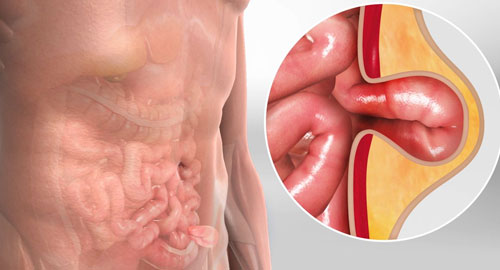
Types of Hernia Treated
- Inguinal Hernia
- Umbilical Hernia
- Incisional Hernia
- Central / Ventral Hernia
- Recurrent Hernia
Problems & Their Management
Hernias can cause swelling, discomfort, heaviness, or pain that may increase during physical activity. Some patients may have only a visible bulge, while others may experience significant pain or digestive discomfort.
- Inguinal Hernia: Appears as swelling in the groin region and may cause pain while walking, coughing, or lifting. Usually managed with laparoscopic or open hernia repair.
- Umbilical Hernia: Causes a bulge near the belly button, sometimes associated with discomfort or pressure. Surgical repair is advised depending on size and symptoms.
- Incisional Hernia: Develops at the site of a previous abdominal surgery due to weakness in the surgical scar. Often managed with mesh repair through open or laparoscopic surgery.
- Central / Ventral Hernia: Occurs in the middle abdominal wall and may increase over time. Management depends on size, location, and associated symptoms.
- Complicated Hernia: If a hernia becomes painful, irreducible, or associated with vomiting or bowel obstruction, urgent surgical treatment may be required.
Surgical Treatment Options
- Laparoscopic Hernia Repair: Minimally invasive repair performed through small incisions with faster recovery and less post-operative discomfort.
- Open Hernia Repair: Traditional surgical repair recommended in selected or complex cases depending on hernia size and condition.
- Mesh Hernioplasty: A surgical mesh may be used to strengthen the abdominal wall and reduce recurrence risk.
- Recurrent Hernia Repair: Specialized surgical correction for hernias that return after previous surgery.
Benefits of Hernia Surgery
- Relief from pain and discomfort
- Repair of abdominal wall weakness
- Prevention of complications like obstruction or strangulation
- Improved mobility and comfort during daily activities
- Faster recovery with laparoscopic techniques
- Reduced risk of recurrence with proper repair
When Should You Consult?
Consultation is recommended if you notice a swelling in the groin, around the belly button, or abdominal wall—especially if it increases while standing or straining. Pain, heaviness, discomfort during lifting, or sudden increase in swelling should not be ignored.
Early evaluation helps diagnose the hernia accurately and allows timely treatment before complications arise.
Expert Hernia Care with Dr. Rochelle Dsouza
Dr. Rochelle Dsouza provides comprehensive evaluation and surgical management for inguinal, umbilical, incisional, and central hernias using advanced laparoscopic and open surgical techniques. Treatment is planned individually with focus on patient safety, minimal discomfort, quicker recovery, and long-term results.
Book your consultation today for expert hernia evaluation and personalized surgical treatment.